
Starting a cafe in Bangladesh is an exciting business idea, but it is not only about renting a shop, decorating the space, and selling coffee. A successful cafe needs the right location, a clear concept, a practical budget, skilled staff, quality coffee beans, reliable equipment, and most importantly, the right coffee machine.
Many new cafe owners focus too much on interior design and forget the operational side of the business. But in reality, your coffee machine, grinder, water quality, barista skill, and after-sales support will directly affect the taste of every cup you serve. If the coffee is inconsistent, customers may visit once, but they may not return.
Explore the best Coffee Machines & Cafe Equipment in Bangladesh
This guide will help you understand how to start a cafe in Bangladesh step by step, especially if you are planning to serve espresso, cappuccino, latte, mocha, cold coffee, frappes, mocktails, or other café-style beverages.
1. Decide What Type of Cafe You Want to Open
Before buying equipment or renting a space, first decide your cafe concept. This will affect your budget, menu, machine choice, staff requirement, and customer experience.
Some common cafe concepts in Bangladesh include:
| Cafe Type | Best For | Equipment Requirement |
|---|---|---|
| Small coffee kiosk | Takeaway coffee, quick service | Compact coffee machine, grinder, blender |
| Standard cafe | Espresso drinks, snacks, seating | Commercial espresso machine, grinder, blender, ice maker |
| Premium specialty cafe | High-quality coffee experience | High-performance espresso machine, precision grinder, trained barista |
| Restaurant with coffee section | Coffee, dessert, beverage service | 1-group or 2-group coffee machine, fully automatic option |
| Office or hotel coffee station | Fast, consistent coffee | Fully automatic coffee machine |
| Bubble tea or beverage shop | Cold drinks, smoothies, flavored beverages | Blender, ice maker, syrups, powders, espresso machine if serving coffee |
Your cafe concept should match your target customer. For example, a university area may work well with affordable cold coffee, frappes, and quick snacks. A premium area like Banani, Gulshan, Dhanmondi, or Uttara may need better seating, a stronger coffee menu, and a professional commercial coffee machine.
2. Study Your Target Customers and Location
Location is one of the biggest factors in the cafe business. A beautiful cafe in the wrong location can struggle, while a simple cafe in the right location can grow quickly.
Before choosing a space, study these points:
- Who will visit your cafe?
- Are they students, office workers, families, tourists, or young professionals?
- Do they prefer takeaway or dine-in?
- What is their expected price range?
- Are there schools, universities, offices, hospitals, gyms, shopping areas, or residential buildings nearby?
- How many cafes or restaurants already exist in that area?
- Is there enough parking or easy access?
A good cafe location should have visibility, easy access, and enough customer movement. But rent should also make sense. High rent can put pressure on your monthly cash flow, especially during the first few months.
3. Prepare a Realistic Cafe Business Plan
A cafe business plan does not have to be complicated, but it should be clear. Many new cafe owners start without calculating monthly costs, and later they struggle with rent, staff salary, raw materials, maintenance, and marketing.
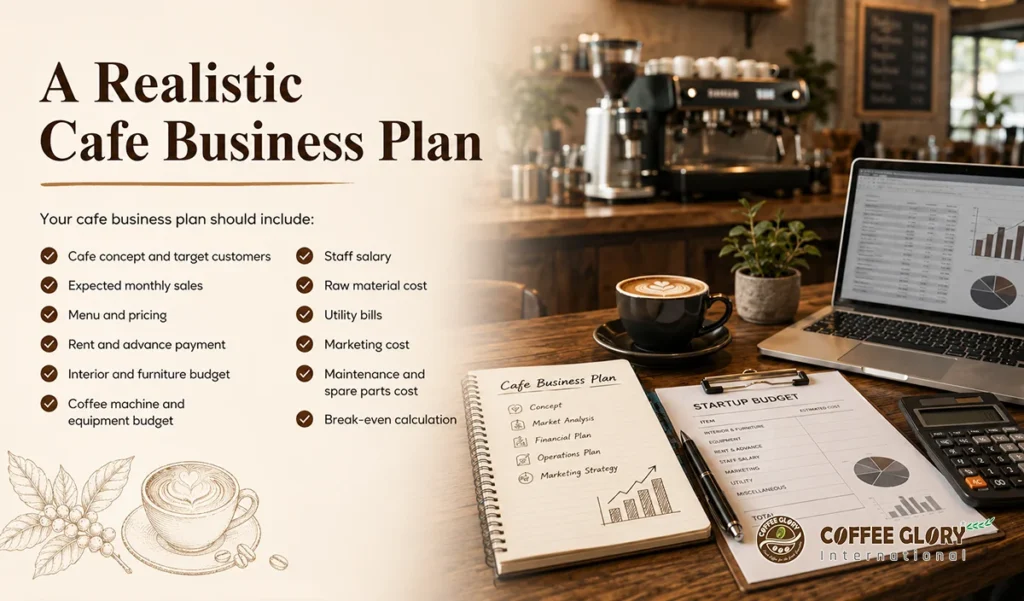
Your cafe business plan should include:
- Cafe concept and target customers
- Expected monthly sales
- Menu and pricing
- Rent and advance payment
- Interior and furniture budget
- Coffee machine and equipment budget
- Staff salary
- Raw material cost
- Utility bills
- Marketing cost
- Maintenance and spare parts cost
- Break-even calculation
You should also calculate your expected daily cup sales. This is very important when selecting a coffee machine. A cafe selling 50 cups per day and a cafe selling 300 cups per day should not use the same machine.
4. Complete the Basic Legal Requirements
Before opening a cafe in Bangladesh, you should check the legal requirements for your area and business category. Requirements may vary depending on your location, business size, and food service type.
Common documents and registrations may include:
- Trade License from the local City Corporation or Municipality
- TIN/eTIN
- BIN/VAT registration, if applicable
- Restaurant or food business-related permission, where required
- Fire safety clearance, where required
- Rental agreement or ownership document for the business space
- Health and hygiene-related requirements for food handling
Always verify the latest requirements with your local authority or a professional consultant before opening. This helps you avoid future fines, delays, or operational issues.
5. Choose the Right Cafe Space and Layout
A cafe is not only about decoration. The layout must support smooth operation. Your barista should be able to move easily between the coffee machine, grinder, sink, refrigerator, blender, ice bin, and service counter.
A good cafe layout should include:
- Customer seating area
- Coffee bar/counter
- Espresso machine and grinder space
- Washing area
- Storage area
- Refrigerator and freezer space
- Ice maker or ice storage
- Billing/POS area
- Pickup counter
- Staff movement space
Do not place the coffee machine in a corner where the barista cannot work comfortably. A commercial coffee machine needs proper space, stable electricity, water connection, drainage, and cleaning access.
6. Make a Complete Cafe Equipment Checklist
The right equipment will help you serve faster, maintain quality, and reduce operational stress. For a coffee-focused cafe, your coffee machine and grinder are the most important investments.
Here is a practical cafe equipment checklist:
| Equipment | Why It Is Important |
|---|---|
| Commercial coffee machine | Prepares espresso, cappuccino, latte, mocha, and other coffee drinks |
| Coffee grinder | Ensures fresh and consistent grinding for better coffee extraction |
| Water filtration system | Protects the coffee machine and improves coffee taste |
| Commercial blender | Needed for frappes, smoothies, cold coffee, and blended drinks |
| Ice maker | Important for cold beverages and high-volume service |
| Refrigerator/freezer | Stores milk, cream, desserts, and ingredients |
| Knock box | Helps baristas clean used coffee grounds quickly |
| Tamper and tamping mat | Ensures proper espresso preparation |
| Milk pitchers | Needed for steaming milk and latte art |
| Digital scale | Helps maintain recipe consistency |
| POS/billing system | Tracks sales and improves order management |
| Cups, glasses, and serving items | Important for presentation and customer experience |
| Cleaning tools | Keeps the machine and bar area hygienic |
If your budget is limited, do not compromise on the coffee machine, grinder, and water filtration. These three directly affect drink quality and machine life.
7. Choose the Right Coffee Machine for Your Cafe
The coffee machine is the heart of your cafe. A good commercial coffee machine helps you serve consistent espresso, steam milk quickly, and handle customer rush hours. A poor machine can slow down service, create inconsistent coffee, and increase maintenance problems.
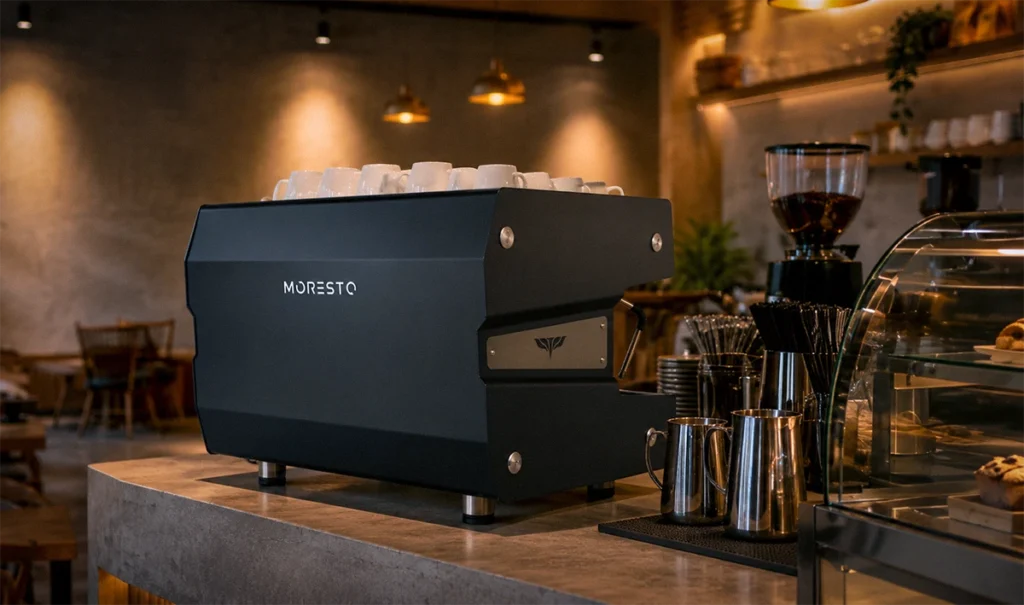
When choosing a coffee machine in Bangladesh, consider:
- Expected daily cup volume
- Menu size
- Number of baristas
- Available counter space
- Power and water connection
- Steam power
- Boiler size
- Brand reliability
- Spare parts availability
- Installation and after-sales service
Here is a simple guide:
| Business Type | Recommended Coffee Machine | Best For |
|---|---|---|
| Small cafe or kiosk | 1-group commercial espresso machine | Low to medium volume |
| Standard cafe | 2-group commercial espresso machine | Regular café operation |
| Busy cafe | 2-group or 3-group commercial espresso machine | High-volume service |
| Restaurant | 1-group or 2-group machine | Coffee with food and dessert |
| Hotel or office | Fully automatic coffee machine | Fast service with minimal training |
| Premium specialty cafe | High-performance espresso machine | Better temperature control and consistency |
For most new cafes in Bangladesh, a 2-group commercial espresso machine is often a practical choice because it gives better workflow during busy hours. However, if you are starting a small takeaway counter, a 1-group machine may be enough in the beginning.
If you are not sure which coffee machine is suitable for your cafe, it is better to consult a coffee equipment specialist before buying. Choosing the wrong machine can cost more in the long run.
Recommended internal link: Explore our range of coffee machines and café equipment in Bangladesh.
8. Do Not Ignore the Coffee Grinder
Many beginners think the coffee machine is everything. But the grinder is equally important. Even an expensive espresso machine cannot produce good coffee if the grind size is inconsistent.
A good coffee grinder helps with:
- Better espresso extraction
- Consistent taste
- Proper crema
- Faster workflow
- Less coffee waste
- More control over flavor
For a cafe, you should use a commercial espresso grinder, not a small home grinder. If you sell whole bean coffee or grind coffee for customers, you may also need a retail/shop grinder.
9. Use Good Water Filtration
Water quality is very important for both coffee taste and machine protection. Hard water can create scale inside the boiler and damage internal parts over time. This can increase maintenance cost and reduce machine performance.
A proper water filtration system can help:
- Improve coffee flavor
- Protect the boiler and pipes
- Reduce scale buildup
- Extend machine life
- Reduce service problems
Before installing a coffee machine, check your water condition and choose the right filter based on your location and usage.
10. Build a Smart Cafe Menu
Your menu should be attractive, profitable, and easy for your team to prepare. Do not start with too many items. A huge menu can create confusion, waste ingredients, and slow down service.
A good starter cafe menu may include:
- Espresso
- Americano
- Cappuccino
- Latte
- Mocha
- Caramel latte
- Cold coffee
- Iced latte
- Frappe
- Hot chocolate
- Tea-based drinks
- Smoothies
- Mocktails
- Pastries or light snacks
You can also add seasonal drinks later. For example, summer is a good time to promote iced coffee, smoothies, mojitos, and cold beverages. Winter is better for hot coffee, hot chocolate, mocha, and warm dessert pairings.
11. Select Quality Coffee Beans
Coffee beans are one of the biggest reasons customers return. If your beans are stale, poorly roasted, or unsuitable for your machine, the drink quality will suffer.
For a cafe, choose beans based on:
- Taste profile
- Roast level
- Espresso performance
- Consistency
- Freshness
- Supplier reliability
- Customer preference
Many cafes prefer medium to medium-dark roasted coffee for espresso-based drinks because it works well with milk beverages like latte, cappuccino, and mocha. However, the best choice depends on your menu and customer taste.
Try to keep your coffee recipe consistent. Use the same dose, grind size, extraction time, and milk quantity so customers get the same taste every time.
12. Hire and Train Your Baristas
A good coffee machine needs a skilled barista. Without training, staff may waste coffee, overheat milk, make inconsistent drinks, or damage equipment through poor handling.
Your barista should know:
- Espresso extraction
- Grinding adjustment
- Tamping
- Milk steaming
- Latte art basics
- Drink recipes
- Machine cleaning
- Customer service
- Basic troubleshooting
Barista training is not only for premium cafes. Even a small cafe needs trained staff to maintain quality and speed.
13. Plan Your Interior and Customer Experience
Interior design matters, but it should match your budget and brand. You do not need to create an overly expensive cafe at the beginning. Focus on comfort, lighting, cleanliness, and photo-friendly corners.
Important interior points:
- Comfortable seating
- Good lighting
- Clean counter design
- Visible coffee bar
- Simple menu board
- Proper ventilation
- Charging points
- Washroom cleanliness
- Brand colors and signage
- Music and overall atmosphere
In Bangladesh, many customers choose cafes not only for coffee but also for meetings, photos, studying, working, and spending time with friends. So the environment should feel welcoming.
14. Choose Reliable Suppliers
Your supplier is not just a seller. A good supplier can help you choose the right coffee machine, grinder, coffee beans, accessories, spare parts, and beverage ingredients.
Before choosing a supplier, ask:
- Do they provide installation?
- Do they offer after-sales service?
- Are spare parts available?
- Can they train your staff?
- Do they supply coffee beans regularly?
- Can they support you when the machine has a problem?
- Do they understand cafe workflow and menu planning?
In the cafe business, machine downtime can directly affect sales. That is why after-sales service and spare parts availability are very important.
15. Market Your Cafe Before Opening
Do not wait until opening day to start marketing. Start building interest before launch.
You can promote your cafe through:
- Facebook page
- Instagram reels
- Google Business Profile
- Opening offer
- Soft opening invitation
- Local influencer visit
- Food delivery platforms
- Short behind-the-scenes videos
- Menu preview posts
- Coffee-making videos
- Customer review posts
For local SEO, create and optimize your Google Business Profile. Add your cafe name, location, opening hours, phone number, photos, menu, and customer reviews. This helps people find your cafe when they search for coffee near them.
16. Common Mistakes New Cafe Owners Should Avoid
Many cafes fail not because the idea is bad, but because the planning is weak. Avoid these common mistakes:
- Buying a coffee machine without checking daily volume
- Using a poor-quality grinder
- Ignoring water filtration
- Hiring untrained baristas
- Creating a menu that is too large
- Choosing a high-rent location without sales planning
- Spending too much on decoration and too little on equipment
- Not keeping spare parts and service support in mind
- Using low-quality coffee beans
- Not maintaining recipe consistency
- Not cleaning the machine daily
- Depending only on discounts instead of quality
A cafe becomes successful when the product, service, environment, and operation work together.
17. Final Checklist Before Opening Your Cafe
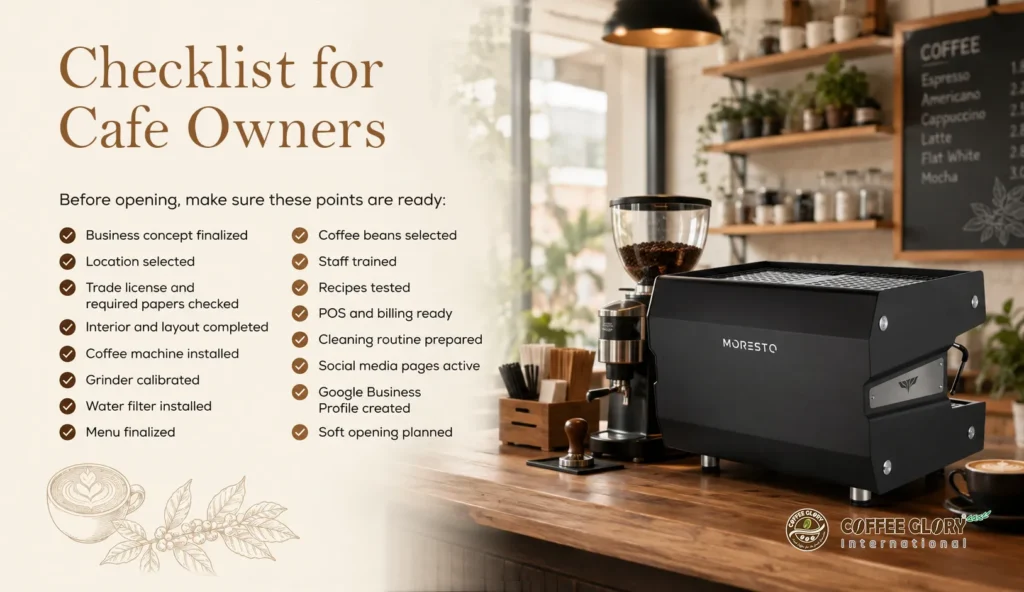
Before opening, make sure these points are ready:
- Business concept finalized
- Location selected
- Trade license and required papers checked
- Interior and layout completed
- Coffee machine installed
- Grinder calibrated
- Water filter installed
- Menu finalized
- Coffee beans selected
- Staff trained
- Recipes tested
- POS and billing ready
- Cleaning routine prepared
- Social media pages active
- Google Business Profile created
- Soft opening planned
A soft opening is very helpful. Invite a small group of customers, friends, or business partners and test your service speed, drink quality, staff performance, and customer feedback before the official launch.
Frequently Asked Questions
1. How much does it cost to start a cafe in Bangladesh?
The cost depends on location, rent, interior design, coffee machine, equipment, menu size, and business concept. A small takeaway cafe will cost much less than a premium dine-in cafe. Before starting, prepare a budget for rent, interior, equipment, staff salary, raw materials, marketing, and maintenance.
2. Which coffee machine is best for a cafe in Bangladesh?
For most standard cafes, a 2-group commercial espresso machine is a practical choice because it can handle regular customer flow and milk-based drinks. For small kiosks, a 1-group machine may be enough. And for offices, hotels, and self-service areas, a fully automatic coffee machine can be more convenient.
3. Do I need a coffee grinder for my cafe?
Yes. A coffee grinder is essential for espresso quality. Fresh and consistent grinding helps improve extraction, flavor, crema, and drink consistency. A good coffee machine cannot perform well with an inconsistent grinder.
4. Can I start a cafe without a trained barista?
You can start, but it is not recommended. Barista training helps maintain coffee quality, reduce waste, improve service speed, and protect the machine from improper use.
5. What equipment is needed to start a coffee shop?
Basic cafe equipment includes a coffee machine, grinder, water filtration system, blender, ice maker, refrigerator, barista tools, cups, glasses, POS system, and cleaning tools. The exact list depends on your menu and cafe size.
6. Why is after-sales service important when buying a coffee machine?
A coffee machine is a long-term business investment. If the machine stops working and there is no technical support or spare parts, your cafe sales can be affected. Always choose a supplier that provides installation, maintenance, spare parts, and after-sales service.
7. Where can I buy coffee machines and cafe equipment in Bangladesh?
You can buy commercial coffee machines, fully automatic coffee machines, coffee grinders, café equipment, coffee beans, spare parts, and beverage ingredients from professional coffee equipment suppliers in Bangladesh. Before buying, compare machine capacity, brand reliability, installation support, and after-sales service.