
Although we offer some of the best coffee machines in Bangladesh, using a proper water filter is mandatory if you want to keep your machine running smoothly and maintain a consistent espresso taste. Many café owners invest in a high-quality coffee machine but ignore water quality. This is one of the biggest mistakes in coffee machine maintenance.
A coffee machine does not work with coffee only. It works with water every single day. In fact, water is one of the main ingredients in every espresso, Americano, cappuccino, latte, and mocha you serve. So, if the water quality is poor, both the coffee taste and machine performance will be affected.
Important Links
- Purchase an Imported High-Quality Coffee Machine and Related Cafe Equipment
- Coffee Machine Maintenance Guide for Cafes in Bangladesh
- Hire a Professional Coffee Machine Engineer
A good water filter protects your coffee machine from scale buildup, improves coffee flavor, reduces maintenance problems, and helps your machine perform better for a long time.
Why Water Quality Is Important for Coffee
Coffee is mostly water. That means the taste of your coffee depends not only on your coffee beans, grinder, and coffee machine, but also on the quality of the water you use.
If the water has too much hardness, minerals, chlorine, odor, rust, or sediment, your espresso may taste flat, bitter, dull, or inconsistent. Even if you use freshly roasted coffee beans and a professional espresso machine, poor water can ruin the final cup.
Good water helps you get:
- Better espresso flavor
- Cleaner aroma
- Balanced acidity
- Better sweetness
- More consistent extraction
- Improved crema
- Stable coffee quality throughout the day
For cafés, restaurants, hotels, and offices, this consistency is very important. Customers expect the same taste every time they order their favorite coffee.
What Happens If You Do Not Use a Water Filter?
A coffee machine uses heat, pressure, and water flow to prepare coffee. When unfiltered water passes through the machine regularly, minerals and impurities can slowly build up inside the internal parts.
This can create several problems:
| Problem | Possible Effect |
|---|---|
| Scale buildup | Boiler, pipe, and valve blockage |
| Poor water taste | Bad espresso flavor |
| Sediment and rust | Internal damage and dirty water flow |
| Chlorine or odor | Unpleasant coffee aroma |
| High water hardness | More maintenance and repair cost |
| Blocked water line | Slow water flow or machine error |
| Boiler stress | Heating problem and lower machine life |
At first, these problems may not be visible. But after a few months, the machine may start showing signs like weak steam, slow heating, irregular water flow, poor espresso extraction, or leakage.
Scale Buildup: The Hidden Enemy of Coffee Machines
Scale buildup is one of the most common problems in coffee machines. It happens when minerals in water, especially calcium and magnesium, deposit inside the machine due to heat.
These mineral deposits can build up inside:
- Boiler
- Heating element
- Pipes
- Valves
- Flow meter
- Group head
- Steam system
- Water inlet area
Once scale builds up, the machine has to work harder. It may take more time to heat water, steam pressure may become weak, and espresso extraction may become unstable.
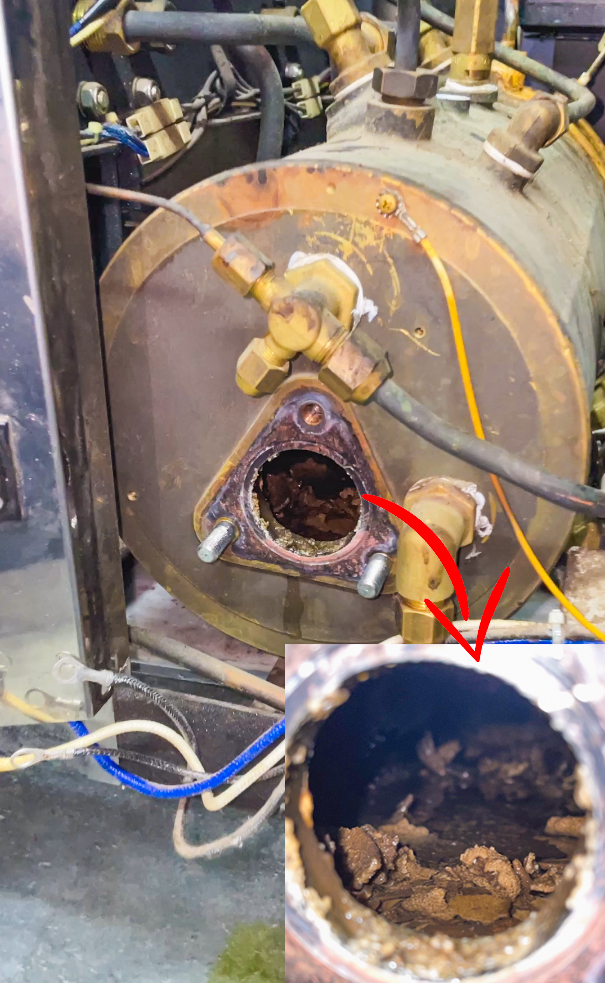
In serious cases, scale can block internal parts and cause expensive repairs. That is why prevention is always better than repair.
A Water Filter Helps Protect Your Coffee Machine
A proper water filter works as a protection system for your coffee machine. It reduces unwanted minerals, sediment, rust, odor, and other impurities before the water enters the machine.
This helps protect important parts like:
- Boiler
- Pump
- Solenoid valve
- Flow meter
- Group head
- Steam system
- Hot water system
- Internal pipes
For commercial coffee machines, this protection is very important because the machine runs every day. If your café serves 100, 200, or 300 cups per day, a large amount of water passes through the machine regularly. Without filtration, the risk of scale and internal damage becomes much higher.
Better Water Means Better Espresso Taste
Many people think espresso taste depends only on coffee beans and barista skill. But water plays a major role in extraction.
If the water is too hard, too soft, or has an unpleasant smell, it can affect how coffee flavors are extracted. A proper water filter helps create a more balanced water condition for espresso.
Filtered water can help improve:
- Espresso clarity
- Crema quality
- Sweetness
- Flavor balance
- Milk-based coffee taste
- Overall drink consistency
This is especially important for cafés because customers may not know the technical reason, but they can feel when the coffee taste changes.
Water Filter Reduces Maintenance Cost
One of the biggest benefits of using a water filter is lower maintenance cost. A coffee machine without proper filtration may need more frequent servicing, descaling, and part replacement.
Poor water can damage or affect:
- Boiler
- Heating element
- Pump
- Valve
- Gasket
- Pipe
- Flow system
- Steam system
Replacing these parts can be expensive, especially for commercial espresso machines. A water filter is a small investment compared to the cost of major machine repair.
For business owners, this means fewer breakdowns, less downtime, and smoother daily operation.
Water Filter Helps Maintain Steam Power
Steam pressure is very important for cafés that serve cappuccino, latte, flat white, mocha, and other milk-based drinks. If the machine has scale buildup inside the boiler or steam system, steam performance can become weak.
Weak steam causes:
- Slow milk steaming
- Poor milk texture
- Difficulty making latte art
- Longer service time
- Inconsistent milk temperature
- Frustrated baristas during rush hours
Using a proper water filter helps reduce scale formation and supports better steam performance. This helps your barista work faster and serve drinks more consistently.
Water Filter Improves Machine Life
A coffee machine is a long-term business investment. If you take care of it properly, it can serve your business for many years. But if you ignore water quality, the machine may start facing problems much earlier.
A water filter helps extend machine life by reducing stress on internal components. It keeps water flow cleaner, reduces mineral deposits, and helps the machine operate more smoothly.
For cafés, restaurants, hotels, and offices, this means better return on investment from the coffee machine.
Why Water Filter Is Important in Bangladesh
In many areas of Bangladesh, water quality can vary from location to location. Some areas may have hard water, some may have sediment, and some may have odor or impurities. This can directly affect coffee machines.
For this reason, using a water filter is not just recommended; it is a practical requirement for coffee businesses.
A café in Dhaka, Chattogram, Sylhet, Khulna, Rajshahi, or any other area should check the water condition before installing a commercial coffee machine. The right water filter can protect the machine from local water-related problems.
Common Signs That Your Coffee Machine Needs Better Filtration
You may need to check your water filter or install a better filtration system if you notice:
- Espresso taste changes frequently
- Steam pressure becomes weak
- Machine takes longer to heat
- Water flow becomes slow
- White scale appears around the machine
- Hot water has an unusual smell
- Group head flow is uneven
- Machine needs frequent servicing
- Boiler or heating issues happen often
- Coffee tastes flat, bitter, or dull
If these signs appear, do not ignore them. Water quality may be one of the main reasons behind the problem.
Water Filter Is Important for Both Commercial and Fully Automatic Machines
Whether you use a commercial espresso machine or a fully automatic coffee machine, water filtration is important.
For commercial espresso machines, the water filter protects the boiler, group head, steam system, and internal pipes. For fully automatic coffee machines, the filter helps protect the brewing system, milk system, water line, and internal components.
A fully automatic machine may show cleaning or descaling alerts, but using filtered water can reduce the risk of scale-related issues and improve drink quality.
Do Home Coffee Machines Also Need Water Filters?
Yes, home coffee machines also benefit from filtered water. Even if the machine is smaller, it still uses heat and water. Over time, scale can build up inside home espresso machines, capsule machines, and fully automatic home coffee machines.
For home users, filtered water can help:
- Improve coffee taste
- Reduce descaling frequency
- Protect the heating system
- Extend machine life
- Keep coffee flavor more consistent
If you are using a home coffee machine regularly, filtered water is a smart choice.
How Often Should You Replace a Coffee Machine Water Filter?
Water filter replacement depends on several factors:
- Water quality in your area
- Daily cup volume
- Machine type
- Filter capacity
- Business usage
- Supplier recommendation
For a busy café, the filter may need replacement more frequently than a small office or home machine. If your water filter is not replaced on time, it may stop working properly and allow minerals or impurities to pass into the machine.
As a general rule, always follow the filter supplier’s recommended usage period and check the water condition regularly.
Water Filter and Coffee Machine Warranty
Many coffee machine problems happen because of poor water quality. In some cases, scale-related damage may not be treated as a normal machine fault because it comes from improper installation or lack of filtration.
That is why many professional coffee machine suppliers recommend installing a proper water filter from the beginning. It protects both the machine and the business owner.
Before installing a coffee machine, ask your supplier what type of water filter is suitable for your machine and location.
Water Filter vs Descaling: Which One Is Better?
Water filter and descaling are not the same thing.
A water filter helps prevent scale and impurities before they enter the machine. Descaling removes scale after it has already built up inside the machine.
| Water Filter | Descaling |
|---|---|
| Preventive protection | Cleaning after scale buildup |
| Used continuously | Done occasionally |
| Protects internal parts | Removes existing mineral deposits |
| Helps improve taste | Mainly used for maintenance |
| Reduces repair risk | Cannot always fix serious damage |
The best approach is to use a proper water filter and follow regular maintenance. Do not wait until the machine becomes blocked or damaged.
Best Practices for Coffee Machine Water Care
To protect your coffee machine, follow these simple practices:
- Install a suitable water filter before using the machine
- Test your water quality if possible
- Replace the filter on time
- Keep the water line clean
- Do not use untreated hard water
- Follow the machine supplier’s recommendation
- Clean the machine regularly
- Schedule professional servicing
- Train staff about water filter importance
These small steps can save your business from major repair costs.
A water filter is not an optional accessory for a coffee machine. It is an essential part of proper coffee machine setup and maintenance. It protects the machine, improves coffee taste, reduces scale buildup, supports steam power, and helps the machine run smoothly for a long time.
If you are planning to buy a coffee machine in Bangladesh, make sure you also plan for a suitable water filter. A good coffee machine can prepare excellent coffee, but only when it is supported by good water, proper installation, regular cleaning, and after-sales maintenance.
For cafés, restaurants, hotels, offices, and home users, filtered water is one of the simplest ways to protect your investment and serve better coffee every day.
Frequently Asked Questions
1. Is a water filter necessary for a coffee machine?
Yes, a water filter is highly recommended for coffee machines. It helps protect the machine from scale, sediment, rust, odor, and water-related damage. It also improves coffee taste and consistency.
2. Can I use a coffee machine without a water filter?
You can use a coffee machine without a water filter, but it is risky. Poor water quality can cause scale buildup, weak steam, slow heating, poor espresso taste, and expensive repair problems.
3. Does filtered water improve espresso taste?
Yes. Filtered water helps remove unwanted odor, sediment, and impurities. This can improve espresso flavor, aroma, crema, and consistency.
4. How often should I change my coffee machine water filter?
It depends on your water quality, daily usage, and filter capacity. A busy café may need to replace the filter more often than a home user or small office. Always follow the supplier’s recommendation.
5. Can hard water damage a coffee machine?
Yes. Hard water can create scale buildup inside the boiler, pipes, valves, and heating system. Over time, this can reduce machine performance and cause serious damage.
6. Do fully automatic coffee machines need water filters?
Yes. Fully automatic coffee machines also need filtered water to protect the brewing system, water line, heating system, and internal parts.
7. What type of water filter is best for a coffee machine?
The best filter depends on your machine type, water condition, and daily usage. For commercial coffee machines, it is better to consult a professional coffee machine supplier before selecting a filter.
8. Is descaling enough if I do not use a water filter?
No. Descaling removes scale after it forms, but a water filter helps prevent scale from forming in the first place. Prevention is better and safer for long-term machine care.